
BLOG POST
Comet Administration a Wakeup Call for Zombie Companies
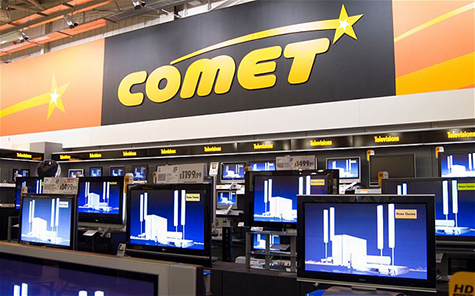
Sadly, it seems no one passed this information on to the directors at one of Britain’s leading electrical retail chains.
Comet, which controls around six per cent of the market share, had been trying to reach its optimum Christmas stock requirement, but run out of cash and was placed into administration after suppliers refused to offer the retailer more credit.
Most traders rely on Christmas sales to kick off the New Year and pay for the rent due in January. But they tend to go bust if they fail to turn over enough cash during the final quarter of the year.
Within the insolvency industry, it was no secret that Comet was in trouble and we all expected the retailer to go bust in the first quarter of 2012.
So far, more than 1,000 jobs have been lost and 126 of the chain’s stores are expected to close over the coming months, leading to further redundancies.
A spokesperson from Deloitte, the chain’s administrator, said last week: ‘We will look to redeploy staff from any stores that close, but there will inevitably be redundancies among the 869 full-time and part-time employees who work in these 41 stores’.
Usually, the evidence and signs are visible 12 months before a company falls into administration; it doesn’t happen overnight.
During that period, suppliers provide credit on favourable terms without knowing the true financial state of the business.
In most insolvency cases, they end up exposed and unprotected because company directors hire and remunerate liquidators who tend to act in the interests of their paymasters.
Comet was obviously trading while insolvent, which is reckless and irresponsible. The legislation is unambiguous: businesses must not trade while insolvent, but the regulations are not being enforced.
The reality is: a significant number – much more than 10 per cent – of British companies are currently trading while insolvent.
If the legislation was applied with rigour the British economy would undoubtedly shrink and unemployment would rise, sending us into a triple dip recession.
Although Comet managed to keep 700 people in employment for 12 months, which can only be a good thing; when a company the size of Comet fails many of its suppliers collapse too.
The chain is the latest in a long list of household names – including luxury clothing brand Aquascutum, Clinton Cards and JJB Sports – that fell into administration in 2012.
And you can expect many more next year; Britain has a huge number of lifeless ‘zombie’ companies that really should be put to death because they have no hope of surviving.

Insolvency and Third-Party Recovery Action: Why Both Matter
When an investment business fails, investors naturally look to the appointed insolvency practitioner (IP) for answers. That is entirely understandable. An administrator or liquidator has…

How ODLA Recovery Works
The Director’s Loan Account Knowledge Centre: A structured approach before formal insolvency The previous articles in this Knowledge Centre explained what an Overdrawn Director’s Loan…

If You Are a Loan Note Holder, Your Experience Matters
If you invested in loan notes issued by the 79th Group, please take a few minutes to complete an Investor Reliance Questionnaire. And if you…

Commercial Solutions before Insolvency
The Director’s Loan Account Knowledge Centre: Why acting early can create more options When a business experiences financial pressure, directors often priorotise immediate needs. Cash…